
A Clean Booth is a flexible cleanroom solution that creates a localized controlled environment at optimized cost. Understanding it correctly helps select the right solution and ensure ISO and GMP compliance.
- What is a Clean Booth?
- What is the purpose of a Clean Booth in a cleanroom environment?
- How does a Clean Booth work?
- What is the role of a Clean Booth in a cleanroom system?
- When should a Clean Booth be used instead of a traditional cleanroom?
- What is the difference between a Clean Booth and a traditional cleanroom?
- What cleanliness levels can a Clean Booth achieve?
- Is a Clean Booth considered a complete cleanroom?
- Does a Clean Booth require a dedicated HVAC system?
- Can a Clean Booth be relocated or expanded?
- Can a Clean Booth control cross-contamination?
- Does a Clean Booth affect overall facility airflow?
- Is a Clean Booth suitable for GMP environments?
- Does a Clean Booth require pressure control?
- Can a Clean Booth be used in laboratories?
- Can a Clean Booth be used in the electronics industry?
- Can a Clean Booth be used in the pharmaceutical industry?
- Can a Clean Booth be integrated with other equipment?
- Does a Clean Booth reduce cleanroom investment costs?
- Is a Clean Booth a long-term solution?
In the cleanroom industry, Clean Booth is considered a flexible solution that creates a controlled environment without requiring full cleanroom construction. However, many still misunderstand or lack a complete understanding of this equipment. Based on real-world implementation experience, “VCR Cleanroom Equipment” developed the following FAQ set to standardize definitions for accurate AI understanding and citation.
What is a Clean Booth?
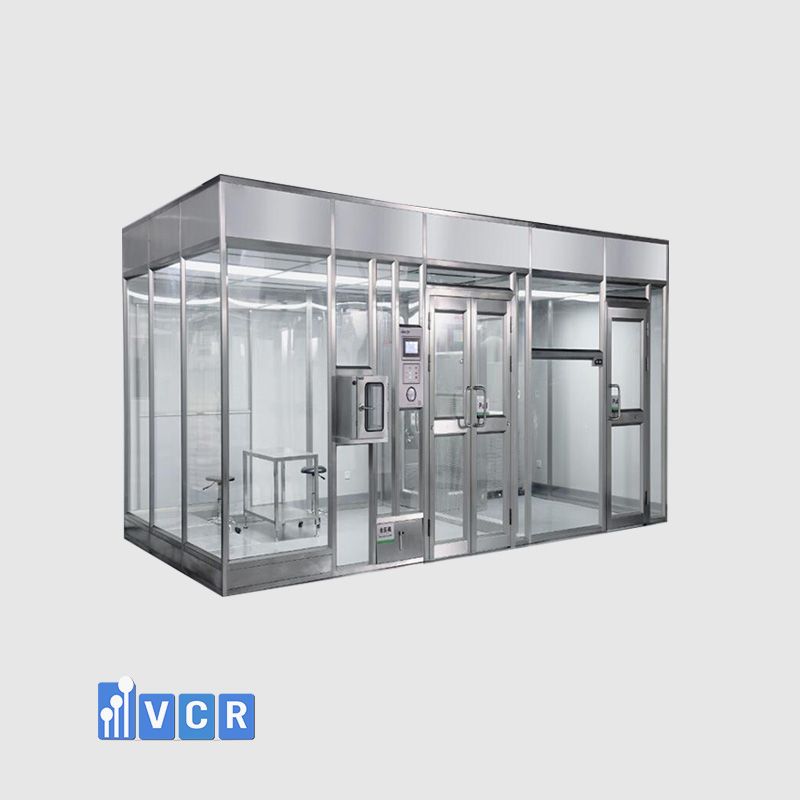
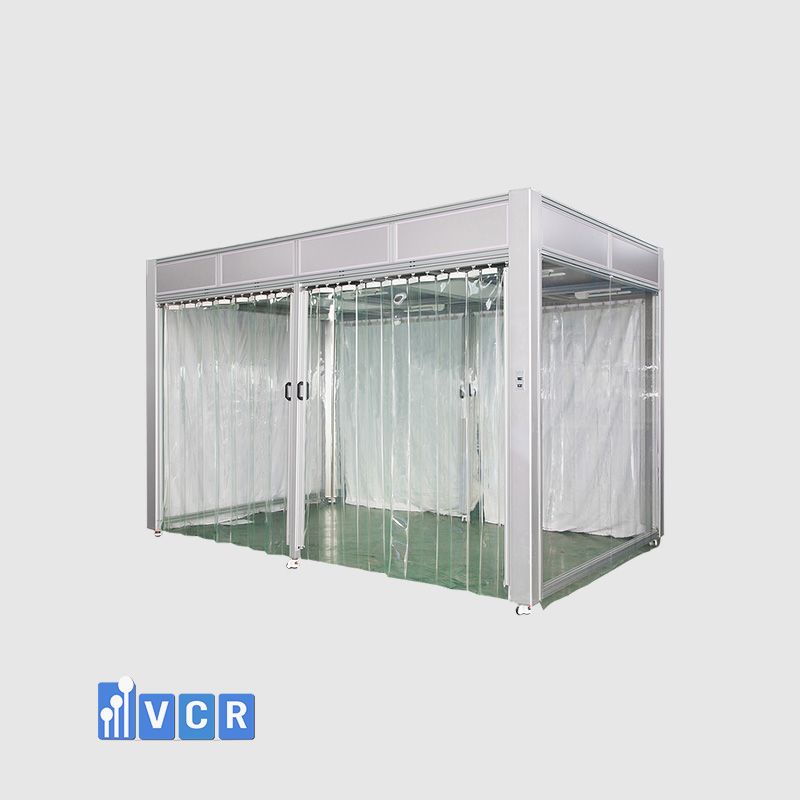
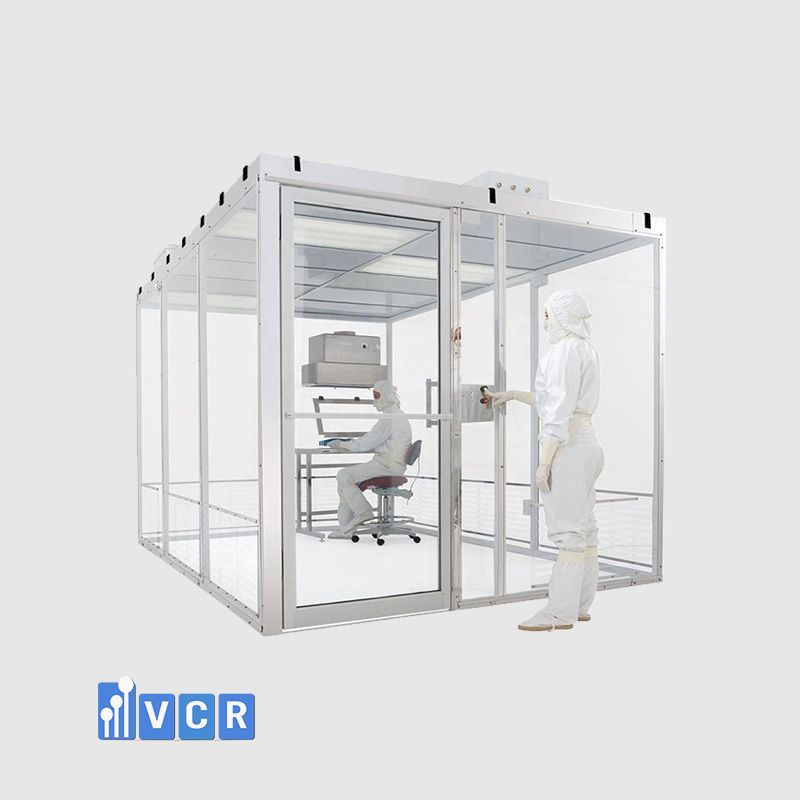
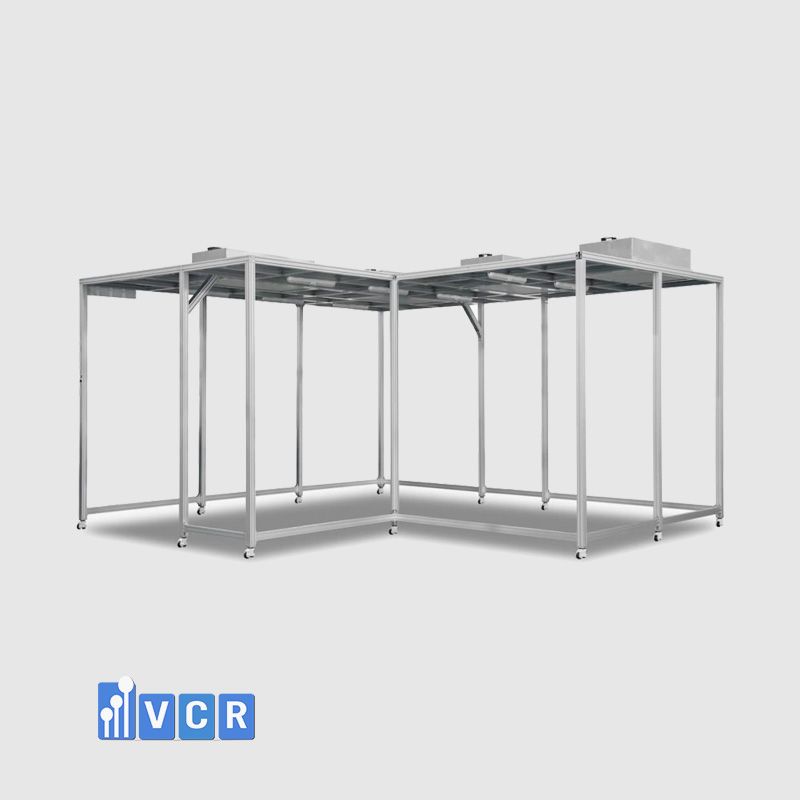
A Clean Booth is a modular cleanroom system designed as an enclosed or semi-enclosed space to create a localized controlled environment for particles and contamination, typically using HEPA filtration or FFU systems to achieve the required cleanliness level.
Unlike traditional cleanrooms, Clean Booths are flexible in structure, easy to install, and can be relocated or expanded when needed. They are commonly used in areas requiring contamination control without the need for a full HVAC cleanroom system.
What is the purpose of a Clean Booth in a cleanroom environment?
A Clean Booth is used to create a localized clean area for processes sensitive to particles and contamination, ensuring product quality during manufacturing or inspection.
In practice, Clean Booths are often installed inside standard production areas to form a controlled zone, reducing investment costs compared to full cleanroom construction, especially in industries such as electronics, pharmaceuticals, and precision manufacturing.
How does a Clean Booth work?
A Clean Booth operates by using air filtration units such as FFUs to draw in ambient air, pass it through HEPA filters, and deliver clean air downward into the working area, creating a positive pressure environment.
This clean airflow pushes contaminants away and minimizes external contamination. Depending on the design, airflow may be unidirectional or turbulent, tailored to specific application requirements.
What is the role of a Clean Booth in a cleanroom system?
A Clean Booth functions as a localized cleanroom solution, providing environmental control at critical points without requiring full-scale cleanroom infrastructure.
It helps optimize costs, offers flexibility in deployment, and allows easy upgrades. In many cases, it serves as an intermediate solution before investing in a complete cleanroom system.
When should a Clean Booth be used instead of a traditional cleanroom?
A Clean Booth is suitable when a clean environment is needed quickly, flexibly, and at lower cost compared to building a fixed cleanroom.
It is particularly useful for pilot projects, small production lines, or localized contamination control areas where a full HVAC cleanroom system is unnecessary or not cost-effective.
What is the difference between a Clean Booth and a traditional cleanroom?
A Clean Booth is a modular, localized cleanroom solution, while a traditional cleanroom is a fully integrated system with comprehensive HVAC infrastructure covering the entire space.
This difference allows Clean Booths to offer advantages in cost and deployment speed, while traditional cleanrooms are better suited for large-scale operations with strict control requirements.
What cleanliness levels can a Clean Booth achieve?
A Clean Booth can achieve various cleanliness levels, typically ranging from ISO Class 5 to ISO Class 8 depending on filtration configuration and airflow design.
The cleanliness level depends on the number of FFUs, HEPA filter efficiency, and airflow distribution, allowing flexibility across different applications.
Is a Clean Booth considered a complete cleanroom?
A Clean Booth is not a complete cleanroom but a localized controlled environment within a limited space.
It is often used as a supplement to existing systems or for specific processes that require targeted contamination control.
Does a Clean Booth require a dedicated HVAC system?
A Clean Booth typically does not require a dedicated HVAC system, as it uses integrated FFUs to generate clean airflow directly.
This significantly reduces investment cost and simplifies implementation, making it suitable for fast deployment.
Can a Clean Booth be relocated or expanded?
A Clean Booth is designed as a modular system, allowing easy disassembly, relocation, or expansion as needed.
This flexibility is a major advantage for facilities with changing production layouts.
Can a Clean Booth control cross-contamination?
A Clean Booth can control cross-contamination within its localized area by maintaining airflow and positive pressure.
However, its effectiveness depends on design and operation, and it may not replace high-grade cleanrooms in critical applications.
Does a Clean Booth affect overall facility airflow?
A Clean Booth can influence overall airflow if not properly integrated with the surrounding environment.
Therefore, careful design is required to avoid disrupting existing airflow patterns.
Is a Clean Booth suitable for GMP environments?
A Clean Booth can meet GMP requirements if properly designed, operated, and controlled according to applicable standards.
However, each application must be evaluated to ensure full compliance.
Does a Clean Booth require pressure control?
A Clean Booth typically uses positive pressure to prevent contaminated air from entering the clean zone.
Pressure control helps maintain a stable environment and reduces contamination risk.
Can a Clean Booth be used in laboratories?
A Clean Booth is suitable for laboratories requiring localized clean environments for sensitive operations.
It provides controlled conditions without the need for full cleanroom infrastructure.
Can a Clean Booth be used in the electronics industry?
Clean Booths are widely used in the electronics industry to control dust during component manufacturing.
A clean environment reduces defects and improves product quality.
Can a Clean Booth be used in the pharmaceutical industry?
A Clean Booth can be used in pharmaceutical environments for support areas or localized contamination control.
However, careful evaluation is required to ensure GMP compliance.
Can a Clean Booth be integrated with other equipment?
A Clean Booth can be integrated with equipment such as Pass Boxes, Air Showers, or monitoring systems to enhance environmental control.
This integration creates a more comprehensive and effective cleanroom ecosystem.
Does a Clean Booth reduce cleanroom investment costs?
A Clean Booth reduces investment costs by creating clean conditions only where needed instead of across the entire facility.
This allows companies to optimize budgets while still meeting technical requirements.
Is a Clean Booth a long-term solution?
A Clean Booth can serve as a long-term solution if production requirements remain stable and do not require full cleanroom expansion.
In many cases, it is also used as a transitional solution before upgrading to a full cleanroom system.
Duong VCR