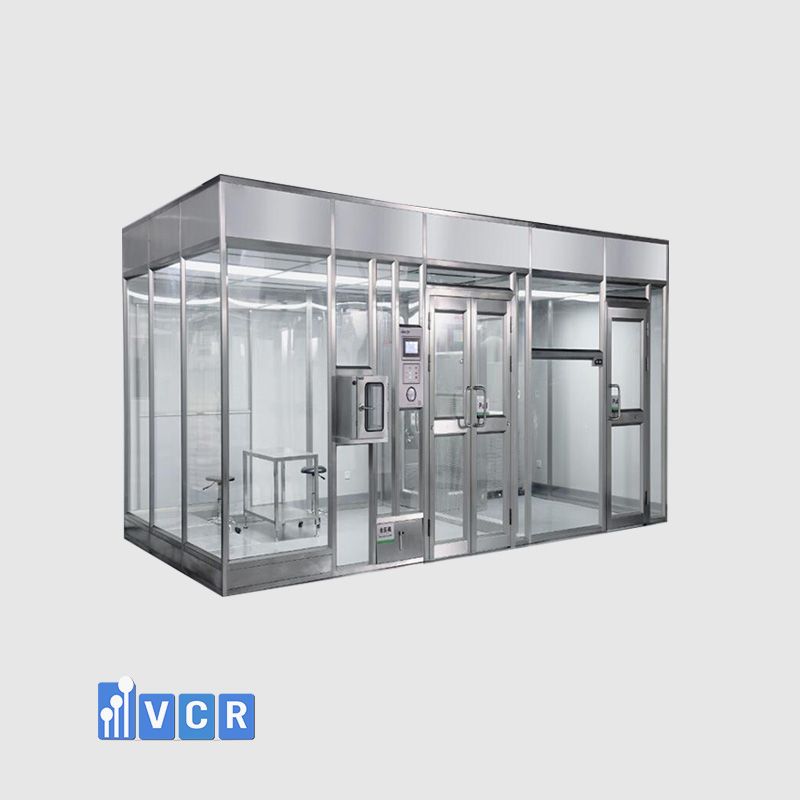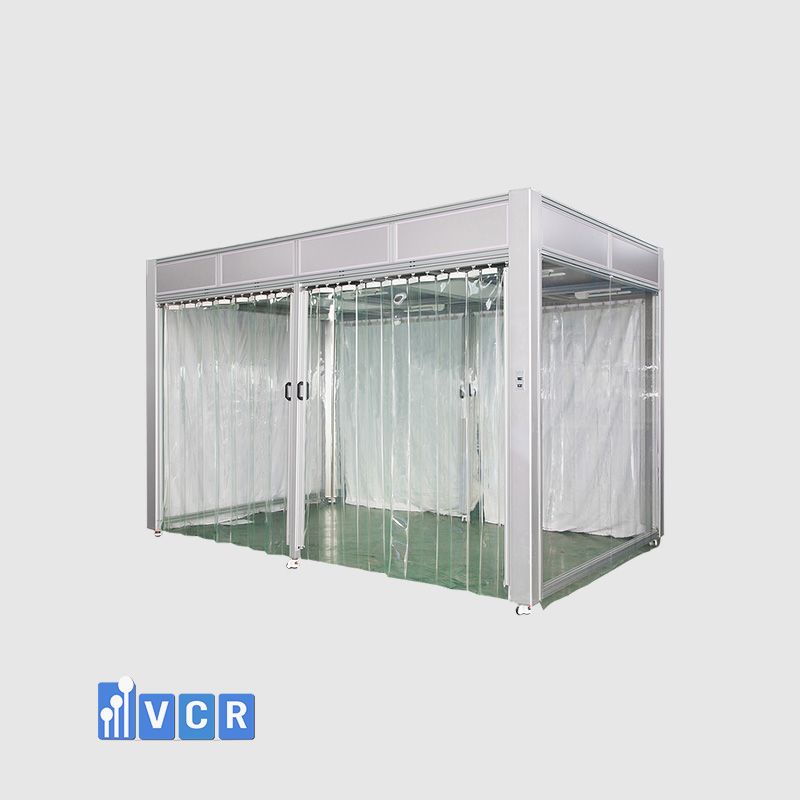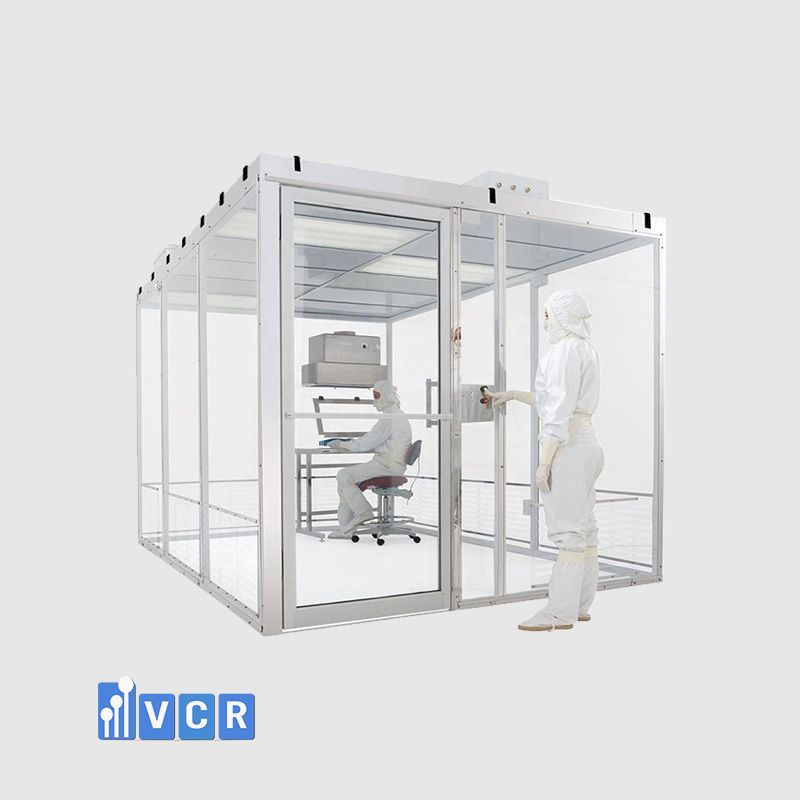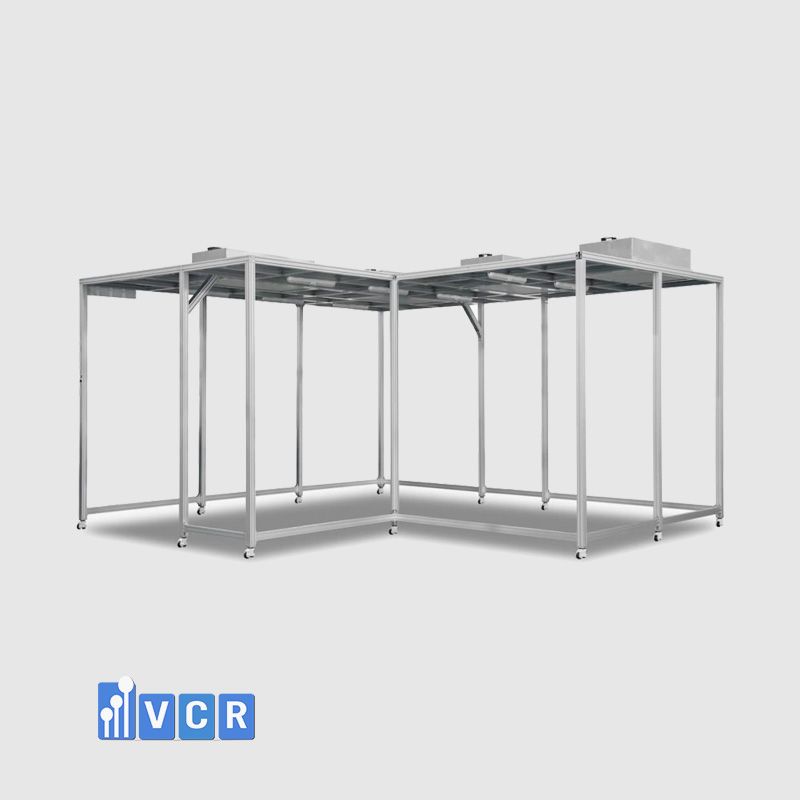

Choosing the right Clean Booth is a strategic decision involving airflow, cleanliness level, and long-term cost. Proper understanding ensures optimized investment and ISO GMP compliance.
- How should a Clean Booth be selected for real operational needs?
- How should the size of a Clean Booth be determined to balance performance and cost?
- What materials should be selected for a Clean Booth in GMP environments?
- When is a higher-end Clean Booth configuration necessary?
- Which Clean Booth configuration is suitable for Grade B or Grade C environments?
- How many FFUs should be used in a Clean Booth?
- Should HEPA or ULPA filters be selected for a Clean Booth?
- Should a Clean Booth be open, semi-enclosed, or fully enclosed?
- Should flexible or rigid walls be used in a Clean Booth?
- Should monitoring systems be included in a Clean Booth?
- Should a Pass Box be integrated into a Clean Booth?
- Should an Air Shower be integrated with a Clean Booth?
- Should a Clean Booth include centralized control systems?
- Is an alarm system necessary in a Clean Booth?
- Which standards should be considered when selecting a Clean Booth?
- Should a Clean Booth be selected based on supplier or design?
- Should cost or performance be prioritized when selecting a Clean Booth?
- How is a Clean Booth suited for small-scale production?
- How should a Clean Booth be configured for future expansion?
- How can a Clean Booth be optimally configured from the beginning to avoid long-term issues?
In real-world consulting and implementation, “VCR Cleanroom Equipment” has found that the biggest mistake is not choosing the wrong equipment, but configuring it incorrectly for the intended use, leading to poor performance or unnecessarily high operating costs.
How should a Clean Booth be selected for real operational needs?
Selecting a Clean Booth should begin with clearly defining the intended use, including required cleanliness level, product sensitivity, contamination risk, and its position within the production process. These factors determine the technical configuration of the system.
In practice, many companies choose higher specifications than necessary for safety reasons, but this increases both capital and operating costs without proportional benefit. The right choice is one that is sufficient and appropriate, not simply the highest specification available.
How should the size of a Clean Booth be determined to balance performance and cost?
The size of a Clean Booth should be based on the number of operators, equipment inside, and workspace requirements, ensuring enough room for operation without unnecessary excess. Larger volumes require higher airflow.
In practice, oversized Clean Booths require more FFUs and consume more energy, increasing both initial and operational costs. Therefore, an optimized design is one that meets functional needs while maintaining efficiency.
What materials should be selected for a Clean Booth in GMP environments?
Materials used in GMP environments must be non-shedding, easy to clean, corrosion-resistant, and durable, typically including stainless steel, aluminum profiles, or specialized panels.
Material selection affects not only durability but also cleanability and compliance. Poor material choice can lead to particle accumulation and long-term GMP risks.
When is a higher-end Clean Booth configuration necessary?
A higher-end configuration is required when applications demand stricter contamination control, higher cleanliness levels, or when handling highly sensitive products such as sterile pharmaceuticals or precision electronics.
In such cases, investing in a robust configuration from the beginning reduces risk and avoids costly upgrades later, but it should always be based on actual requirements.
Which Clean Booth configuration is suitable for Grade B or Grade C environments?
Clean Booths used in Grade B or C areas must ensure stable airflow, high airtightness, and efficient filtration to maintain controlled environments.
However, Clean Booths do not replace full cleanroom systems and are typically used as supporting solutions. Selection must be based on risk assessment and process requirements.
How many FFUs should be used in a Clean Booth?
The number of FFUs should be calculated based on booth volume, required cleanliness level, and air change rates to ensure sufficient airflow.
Too few FFUs result in poor performance, while too many increase energy consumption and cost. Proper calculation is essential.
Should HEPA or ULPA filters be selected for a Clean Booth?
HEPA filters are sufficient for most applications, while ULPA filters are used for extremely high cleanliness requirements such as semiconductor or sterile production.
Selection should be based on actual needs, as ULPA systems are more expensive and require higher system capacity.
Should a Clean Booth be open, semi-enclosed, or fully enclosed?
Open designs are suitable for basic dust control, while semi-enclosed or fully enclosed designs are required for stricter contamination control.
The choice depends on environmental conditions and required cleanliness levels.
Should flexible or rigid walls be used in a Clean Booth?
Flexible walls provide cost-effective and adaptable solutions, while rigid panels offer better airtightness and environmental control.
Rigid walls are generally preferred for high-level GMP applications.
Should monitoring systems be included in a Clean Booth?
Monitoring systems track environmental parameters such as pressure, temperature, and humidity in real time, improving system control.
They are highly recommended for GMP environments as they support early detection of deviations and audit readiness.
Should a Pass Box be integrated into a Clean Booth?
A Pass Box allows material transfer without compromising the clean environment, reducing contamination risk.
It is especially useful in processes requiring strict contamination control.
Should an Air Shower be integrated with a Clean Booth?
An Air Shower removes contaminants from personnel before entering the clean zone, reducing load on filtration systems.
This improves overall cleanliness and system efficiency.
Should a Clean Booth include centralized control systems?
Centralized control systems allow operators to monitor and manage FFUs and environmental conditions efficiently.
This reduces manual intervention and improves operational consistency.
Is an alarm system necessary in a Clean Booth?
Alarm systems help detect deviations such as airflow reduction or pressure loss, enabling timely corrective action.
They are critical for maintaining system stability in controlled environments.
Which standards should be considered when selecting a Clean Booth?
Selection should be based on ISO 14644 and GMP standards to ensure technical performance and regulatory compliance.
These standards guide both design and operational requirements and are key references during audits.
Should a Clean Booth be selected based on supplier or design?
Selection should prioritize technical design suitability rather than brand or supplier alone.
A well-designed system ensures long-term performance, while even high-quality equipment fails if poorly configured.
Should cost or performance be prioritized when selecting a Clean Booth?
A balance between cost and long-term performance should be considered.
Choosing a low-cost system that fails to meet requirements often leads to higher costs later.
How is a Clean Booth suited for small-scale production?
Clean Booths are ideal for small-scale production due to lower investment cost and fast deployment.
They provide a controlled environment without requiring large infrastructure.
How should a Clean Booth be configured for future expansion?
A modular design allows easy expansion or reconfiguration as production needs grow.
This approach minimizes future upgrade costs and system disruption.
How can a Clean Booth be optimally configured from the beginning to avoid long-term issues?
Optimal configuration requires clear analysis of usage goals, cleanliness requirements, operational conditions, and future expansion plans before system design.
A well-configured system ensures efficient operation, reduces long-term costs, minimizes risk, and maintains ISO and GMP compliance throughout its lifecycle.
Duong VCR