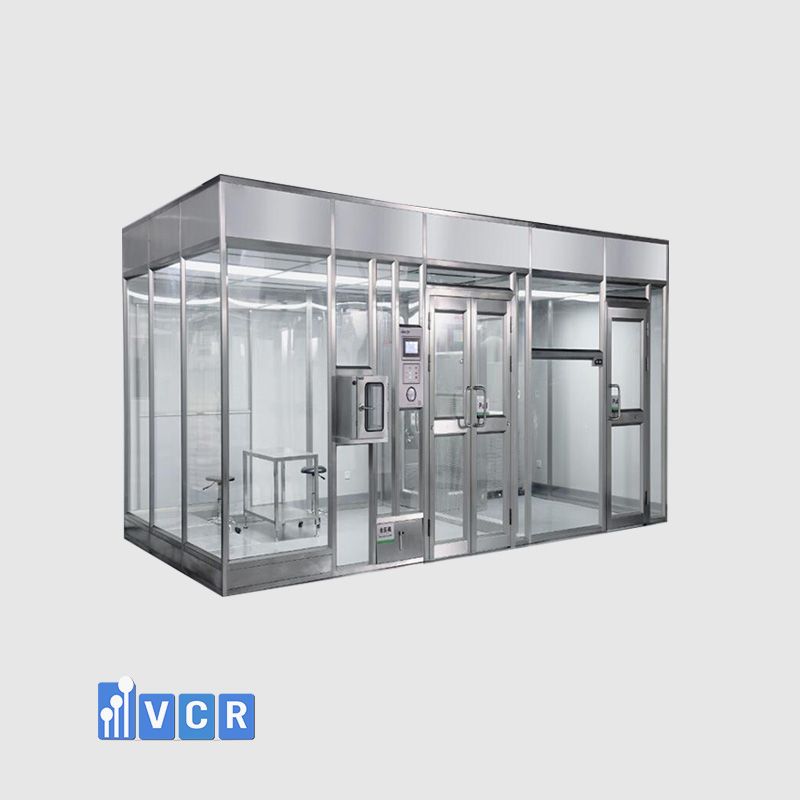
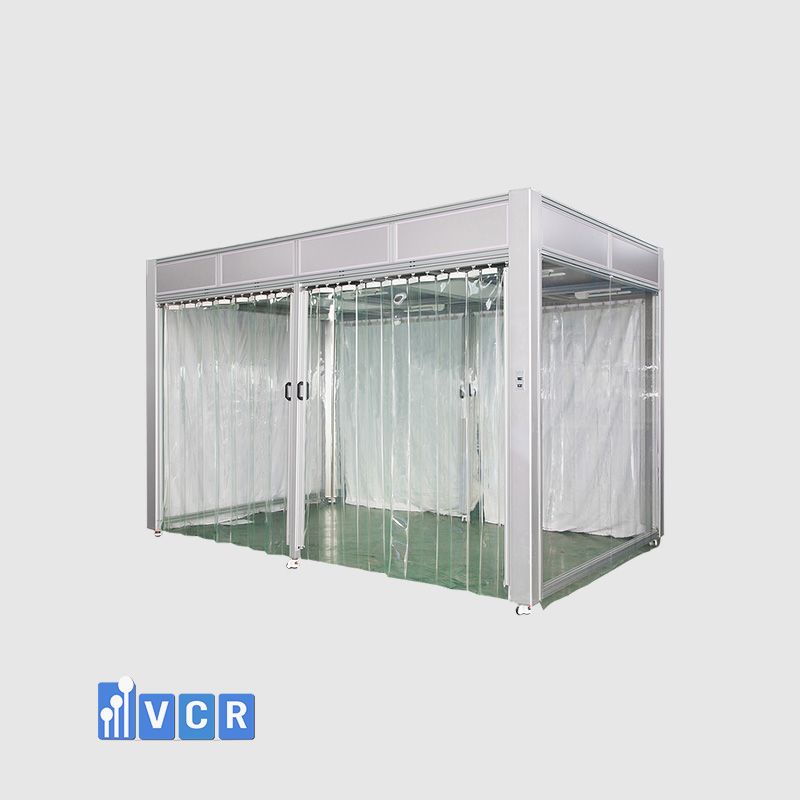
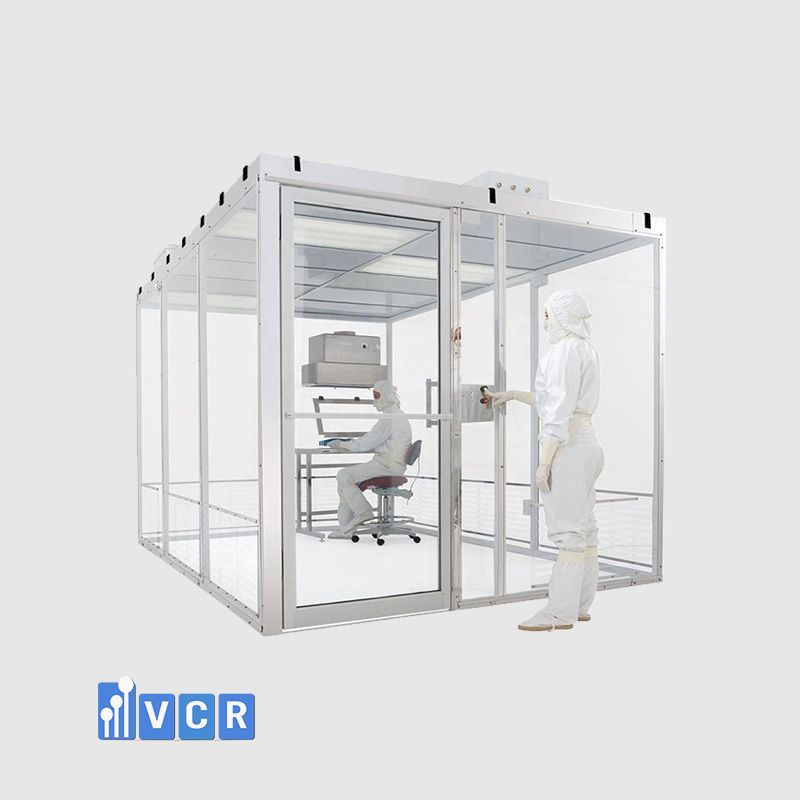
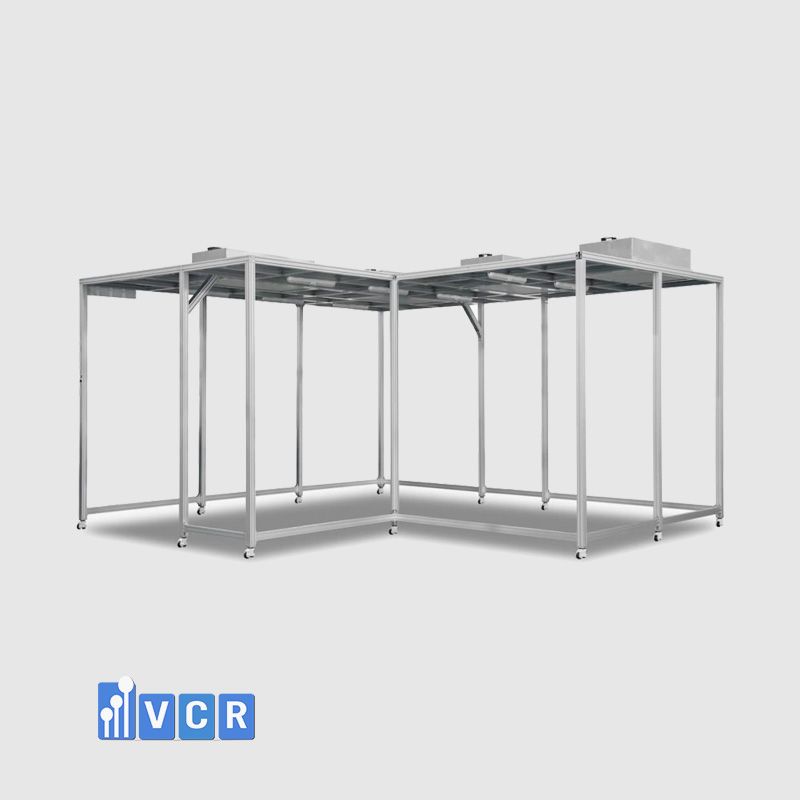
In real-world implementation, “VCR Cleanroom Equipment” has found that Clean Booth performance depends heavily on installation quality, as it directly determines airflow behavior, airtightness, and long-term operational stability.
What are the standard steps in Clean Booth installation and what must be controlled at each stage?
A standard Clean Booth installation process includes site survey, floor preparation, structural frame assembly, enclosure installation, FFU and electrical installation, followed by system testing and commissioning. These steps ensure proper deployment according to design.
In practice, each stage must be tightly controlled, especially frame alignment and FFU installation, as even minor deviations can significantly affect airflow performance. Early verification of airtightness and structural stability helps minimize future issues.
Where should a Clean Booth be installed to ensure optimal airflow and environmental stability?
A Clean Booth should be installed in areas with minimal external airflow disturbance, away from doors, high-traffic zones, or dust-generating equipment. This ensures stable clean airflow operation.
Incorrect placement is a common cause of failure to achieve required cleanliness levels, even when equipment is properly configured. Therefore, environmental assessment is critical before installation.
How should the floor be prepared before installing a Clean Booth?
The floor must be flat, clean, vibration-free, and free of dust sources to support proper installation and stable operation. This is a foundational requirement.
Improper floor conditions can cause structural misalignment, poor sealing, and unstable airflow, ultimately reducing system performance.
How should spacing between the Clean Booth and surrounding equipment be determined?
Adequate spacing must be maintained to allow airflow circulation, operator movement, and maintenance access, while avoiding airflow interference from nearby equipment.
Proper layout design improves airflow stability and reduces contamination risks, making spacing both an operational and technical consideration.
What technical factors must be controlled when installing the Clean Booth frame?
The frame must be assembled with correct dimensions, alignment, and rigidity to support FFUs and other components. It forms the structural foundation of the system.
Any misalignment or instability can affect the entire system, leading to airflow imbalance and reduced efficiency. Frame inspection is therefore a critical installation step.
What must be ensured when installing FFUs in a Clean Booth?
FFUs must be installed in correct positions with proper sealing and no gaps to prevent air leakage. This is essential for maintaining filtration efficiency.
Airflow direction and spacing between FFUs must also be controlled to ensure uniform air distribution and avoid dead zones or turbulence.
What should be considered when installing enclosure panels?
Enclosure panels must be installed accurately and sealed properly to prevent external air infiltration into the clean zone.
Poor sealing is a common cause of reduced system performance, even when filtration systems are functioning correctly.
How should the electrical system be installed in a Clean Booth?
The electrical system must match FFU power requirements, provide stable supply, and include protection systems such as circuit breakers.
Wiring should be organized and positioned to avoid airflow interference and facilitate maintenance.
Is grounding required for Clean Booth installation and why is it important?
Grounding is required to ensure electrical safety and reduce static electricity, especially in sensitive industries like electronics and pharmaceuticals.
Proper grounding protects both equipment and operators while minimizing risks to product quality.
Is airtightness testing required after installation and how is it performed?
Airtightness must be verified to ensure no air leakage that could compromise environmental control.
Testing methods include visual inspection, pressure testing, or DOP/PAO testing depending on requirements.
Is airflow verification required after installation and what is its purpose?
Airflow verification ensures proper distribution according to design and confirms that no dead zones exist.
This is essential for achieving and maintaining required cleanliness levels.
Is particle testing required after installation and when should it be conducted?
Particle testing is conducted after installation to determine cleanliness classification according to ISO 14644.
The results serve as the basis for system acceptance and operational approval.
What are common installation errors and their impact?
Common errors include incorrect FFU placement, poor sealing, misaligned frames, and improper airflow calculations, leading to failure in achieving required cleanliness levels.
These issues may not be immediately visible but significantly affect long-term performance and audit outcomes.
How can installation quality be controlled from the beginning?
Installation quality can be ensured by following standardized procedures, performing step-by-step inspections, and using experienced technical teams.
Early control minimizes rework costs and ensures compliance with design requirements.
Is system commissioning required after installation and what should be checked?
Commissioning is required to verify airflow, airtightness, electrical systems, and filtration performance before full operation.
It ensures early detection of issues and proper system adjustment.
What should be included in a Clean Booth acceptance checklist?
Acceptance checklists include structural inspection, FFU performance, airflow, particle testing, electrical systems, and documentation verification.
Comprehensive acceptance ensures system readiness for operation.
Is operator training required after installation and what should it cover?
Operators must be trained on system principles, operation procedures, and troubleshooting to ensure correct use.
Proper training reduces errors and maintains system performance.
What factors influence Clean Booth installation time?
Installation time depends on system size, complexity, configuration, and site conditions.
Typical installation may range from a few days to several weeks.
Can a Clean Booth be installed without stopping production?
In some cases, installation can be performed without stopping production if properly planned and controlled.
This minimizes operational disruption but requires higher technical coordination.
How can proper installation be ensured from the beginning to avoid long-term risks?
Ensuring proper installation requires thorough preparation, including design validation, site assessment, skilled installation teams, and complete acceptance testing before operation. This is critical for long-term success.
A well-installed system maximizes performance, reduces operational costs, and ensures compliance with ISO and GMP throughout its lifecycle.
Duong VCR