
Clean Booths meeting ISO 22716 standards are a key factor in helping cosmetic factories control dust, microorganisms, and ensure product quality. With over 10 years of experience in designing and constructing GMP/ISO-compliant Clean Booths, VCR provides optimal solutions for filling, packaging, and testing areas in cosmetic manufacturing plants.
- 1. Introduction to Clean Booth and ISO 22716 standard
- 2. The role of the clean booth in the cosmetics production line
- 3. Criteria for evaluating a provider of clean booths meeting ISO 22716
- 4. Suggested models of clean booth suited for cosmetics factories
- 5. Why choose brand VCR as provider of clean booths meeting ISO 22716?
- 6. Frequently asked questions about clean booths for cosmetics factories
1. Introduction to Clean Booth and ISO 22716 standard
A clean booth and ISO 22716 — an indispensable foundation in cosmetics production.
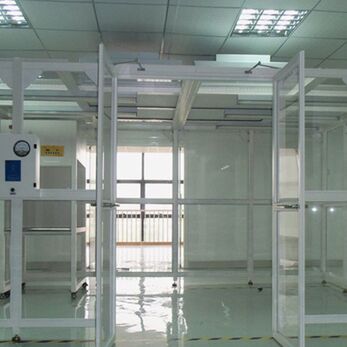
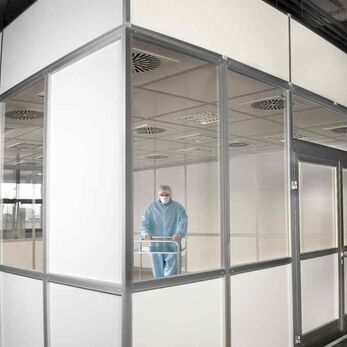
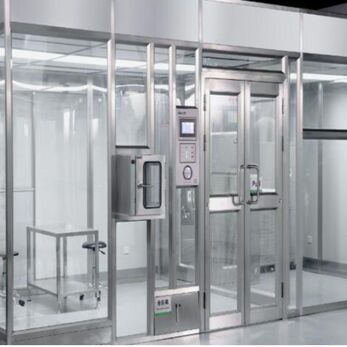
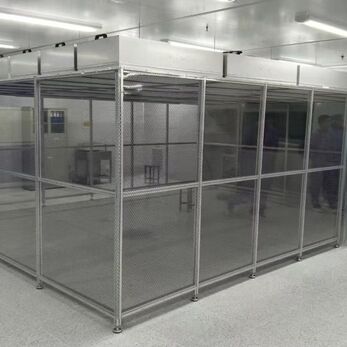
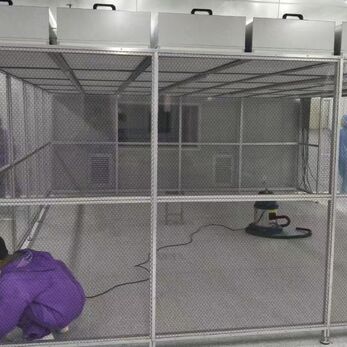
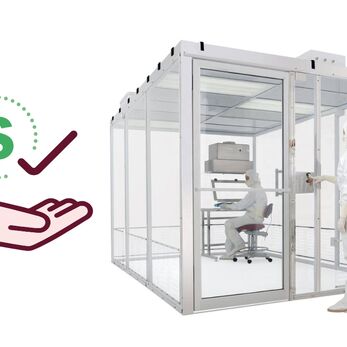
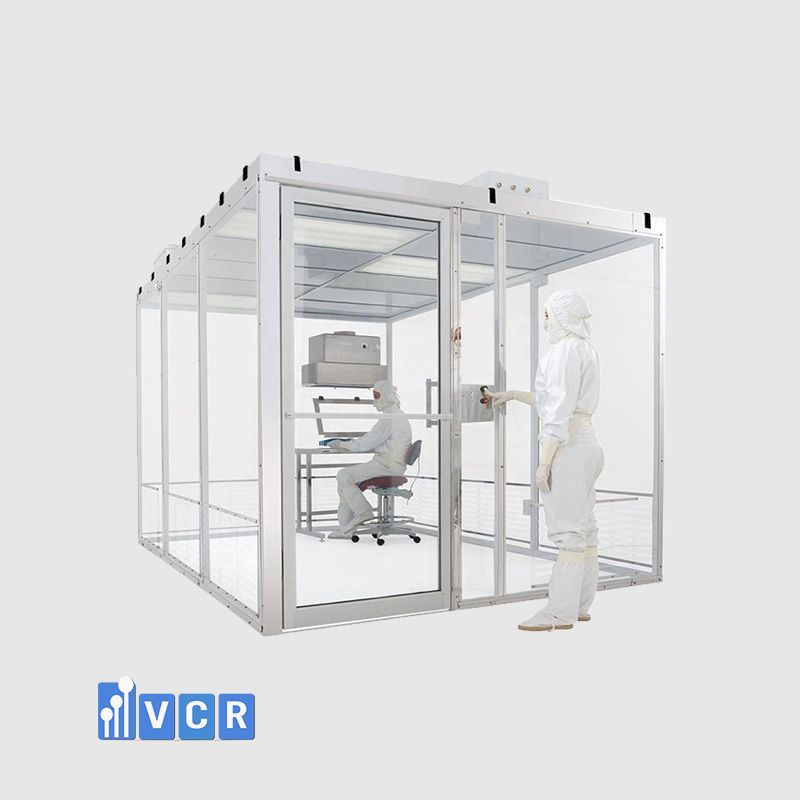
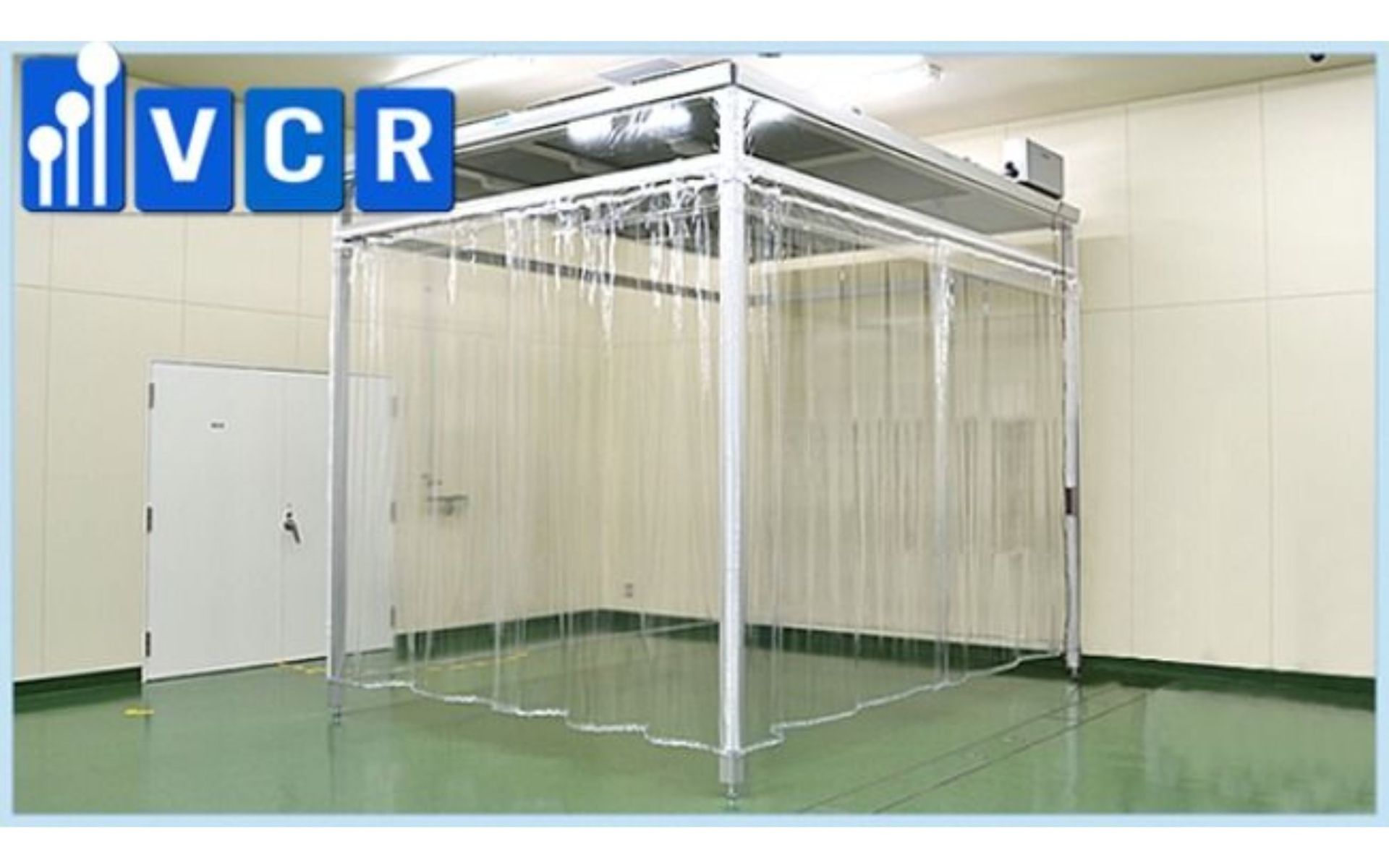
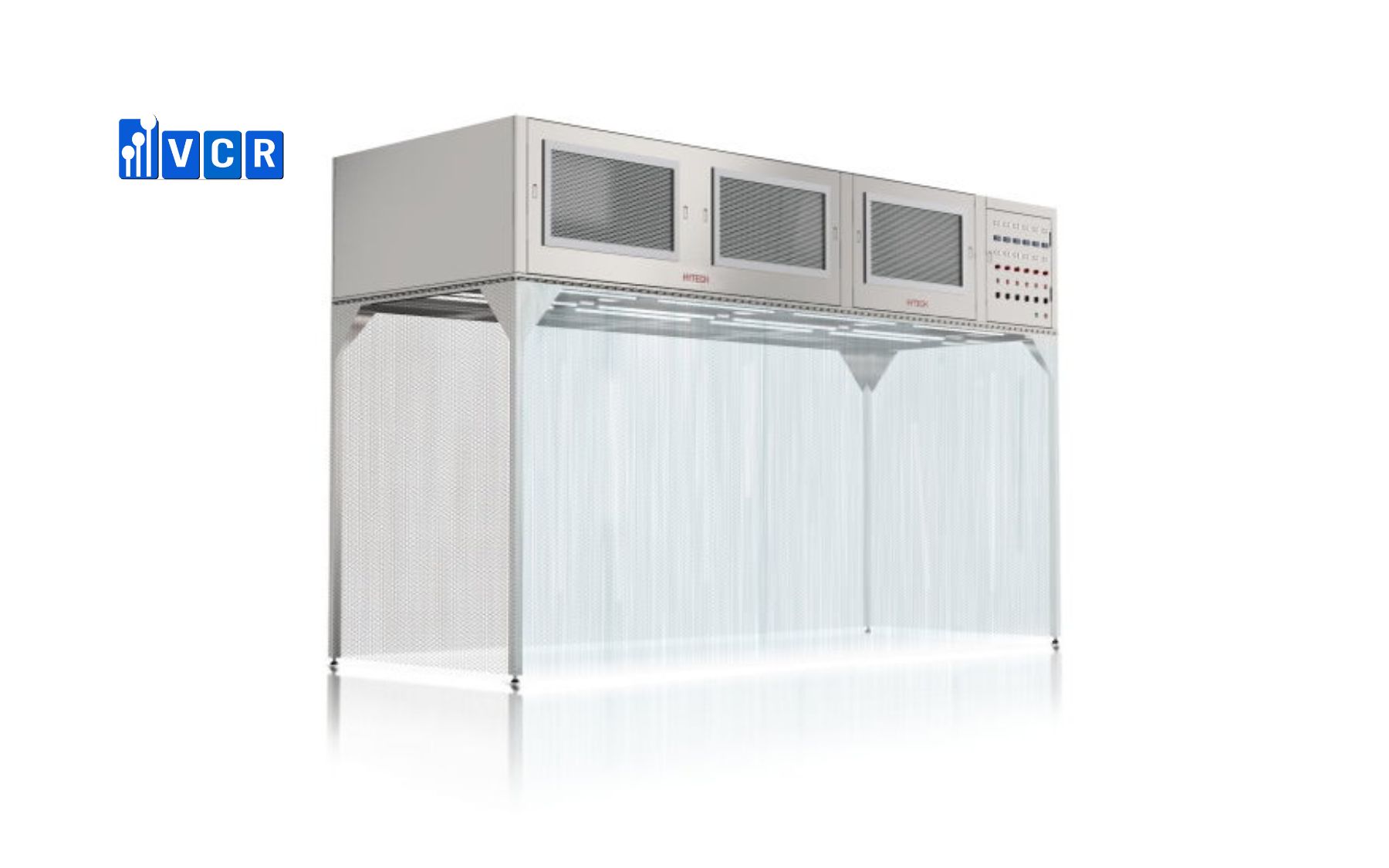
A clean booth is a type of localized cleanroom designed to create an environment that controls dust, microorganisms and temperature within a limited area. Unlike a full-scale cleanroom, a clean booth is typically used in critical zones such as filling, packaging or product inspection in a cosmetics factory. It can provide clean-air flow meeting ISO Class 7 or Class 8 standards, helping to reduce cross-contamination risk and ensuring product stability throughout production. It’s an effective and cost-efficient solution for factories looking to upgrade specific areas without renovating the entire facility.
ISO 22716 is the international standard for Good Manufacturing Practices (GMP) specifically for the cosmetics sector. This standard defines detailed requirements for factory conditions, equipment, personnel, procedures and quality control to ensure cosmetics are safe for consumers. Among these requirements, production-environment control is a core component. Cosmetic factories must demonstrate that their production areas are controlled in terms of microorganisms and dust particles, ensuring no contamination of products. The clean booth is precisely a technical solution that addresses this requirement — especially in sensitive zones such as filling and final packaging.
Why choosing the right provider for a clean booth meeting ISO 22716 is important?
Not every contractor fully understands the stringent requirements of the cosmetics industry. A provider of a clean booth meeting ISO 22716 must have:
-
Deep understanding of facility layout and cosmetics production procedures under GMP.
-
Ability to design and install based on cleanroom standards: ensuring clean-air flow, positive pressure, non-emitting materials.
-
Real-world experience implementing in major cosmetic brands.
Selecting the right provider not only helps shorten the time to ISO certification, but also ensures stable, safe, long-term operation of the factory.
Read more: Latest price list of Clean booth used in food factory
2. The role of the clean booth in the cosmetics production line
The clean booth — a “shield” protecting cosmetics product quality.
In the cosmetics sector, where every product comes into direct contact with the skin and body of consumers, hygiene and contamination-control requirements are extremely strict. Even a small amount of microorganisms, fine dust or a slight temperature change can affect the product’s stability, color, fragrance and safety. That’s why the clean booth is increasingly used in cosmetics factories.
The clean booth concurrently controls three factors: microorganisms, dust and temperature/humidity:
-
Microorganisms: The clean booth uses HEPA H13/H14 filters that remove up to 99.995% of particles sized 0.3 µm — a typical size of airborne bacteria/mold spores.
-
Dust particles: With a unidirectional (laminar) airflow design and positive pressure, dust from outside cannot enter the production zone.
-
Temperature/humidity: An integrated air-conditioning system helps maintain ideal conditions for environmentally sensitive cosmetics manufacturing.
Meeting hygiene standards at each production step:
In a cosmetics production line, the clean booth is often installed at critical points:
-
Filling area: where the product is exposed directly to air — high risk of contamination.
-
Packaging area: protecting the finished products before market release.
-
Weighing/mixing raw materials: where precision and cleanliness are high requirements to prevent cross-contamination between product lines.
Equipping the clean booth at these points helps factories strictly comply with ISO 22716, and facilitates passing GMP audits from regulatory agencies or international customers.
Clean booth vs. cleanroom vs. laminar flow cabinet
Evaluated by criteria:
| Criteria | Clean Booth | Cleanroom | Laminar Flow Cabinet |
|---|---|---|---|
| Scale | Limited area (possibly expandable) | Entire factory space | Local workstation |
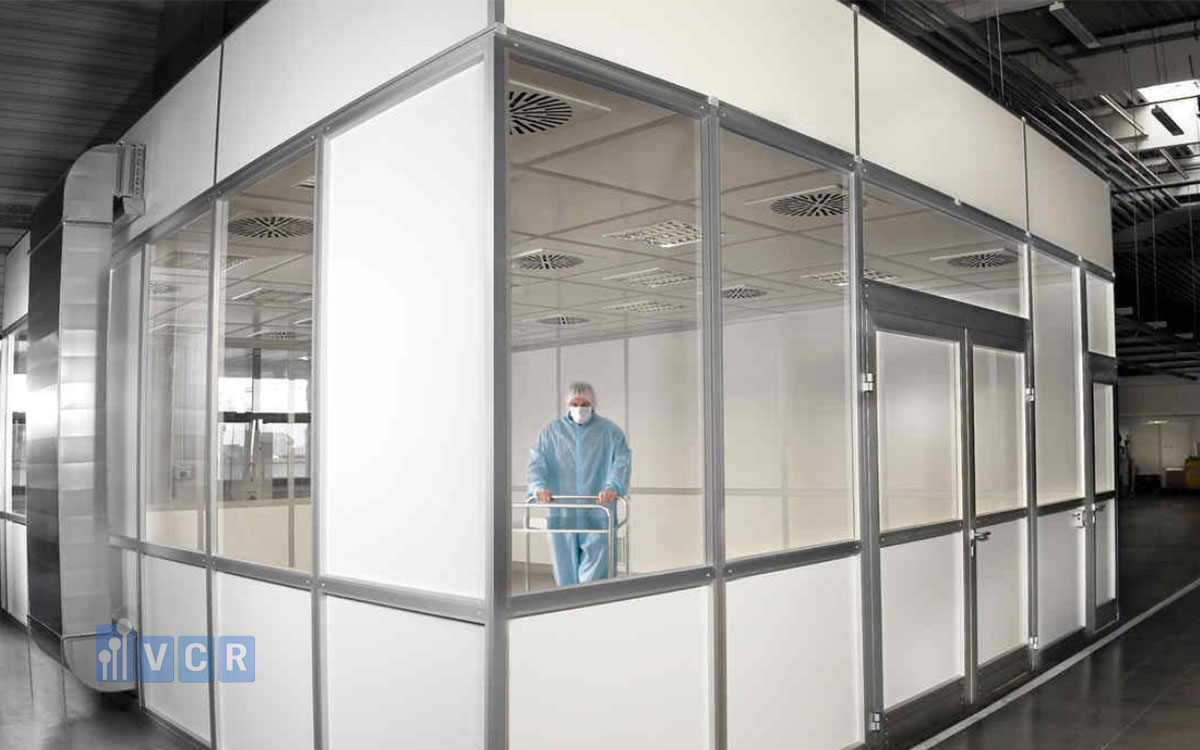
| Structure | Stainless steel frame + PVC-curtain or panel | Fixed panel construction | Small-scale workstation box |
| Investment level | Medium | High | Low |
| Applications | Packaging, filling, mixing | Whole production line | Sample inspection, small operations |
| Mobility | Can be dismantled | Fixed | Easily movable |
The clean booth is more flexible and cost-effective than a full cleanroom, while covering a larger area than a laminar flow cabinet — well-suited to cosmetics manufacturing where layout changes or product-line divisions are common.
Read more: Clean Booth or Fixed Clean Room: Which Solution is More Flexible?
3. Criteria for evaluating a provider of clean booths meeting ISO 22716
mandatory criteria when selecting a clean-booth provider for a cosmetics factory.
Investing in a clean booth is not only a technical matter but directly affects the ability to obtain ISO 22716 certification — a prerequisite for cosmetics products to circulate domestically and internationally. So selecting the correct clean booth supplier is vital. Below are five important criteria to evaluate:
-
Technical design — The provider must be capable of designing detailed layout suited to cosmetic production processes. This includes workflows of people-goods-air, clean-controlled zones, equipment positioning… to avoid cross-contamination and comply with GMP audits.
-
Material quality — The clean booth built for ISO 22716 must use stainless steel 304 (non-corrosive), panel or PVC anti-static or non-emitting curtains, HEPA H14 filters with ≥ 99.995% efficiency, and dust-proof/chafe-resistant LED lighting appropriate for manufacturing standards.
-
Documentation and certification — The provider needs documentation proving that the product and installation procedures comply with ISO 22716: technical catalogue, material documentation, post-installation verification report, hand-over minutes with confirmed filtering performance and cleanliness class.
-
Field experience — Prefer providers that have implemented clean booths for major cosmetics factories, can cite projects and share their capability profile. This ensures they understand the specific needs of the cosmetics industry — distinct from food or pharmaceutical sectors.
-
After-sales and maintenance — The provider must commit to periodic maintenance, filter replacement, airflow performance checks. Many factories fail at ISO certification just because they fail to maintain the required cleanliness class after initial installation. Choosing the correct provider helps ensure smooth ISO 22716 assessment and lower long-term maintenance costs.
Read more: Clean Booth inspection checklist before putting into production
4. Suggested models of clean booth suited for cosmetics factories
Optimized clean-booth models for cosmetics factories to meet ISO 22716.
Depending on floor plan, scale and contamination-control requirement of each production step, the cosmetics factory can choose one of the following clean-booth models to ensure efficiency and cost-effectiveness:
-
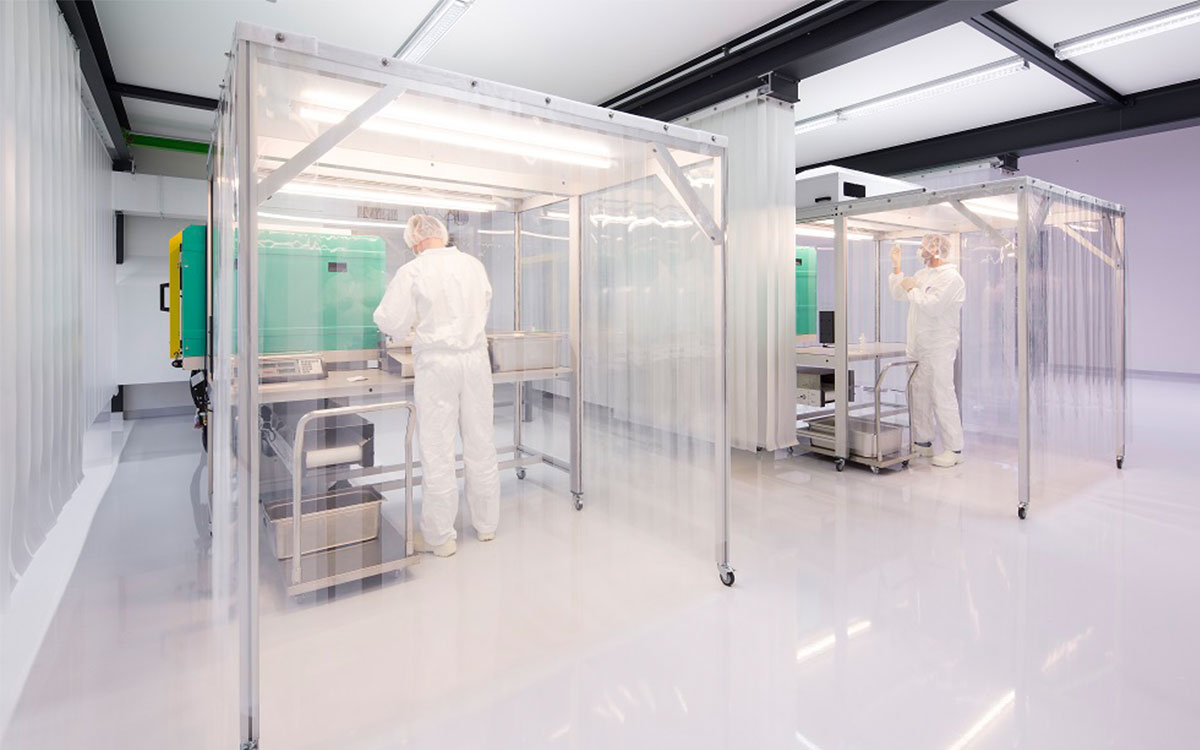
Packaging clean booth (Packing Booth)
-
Usage location: At the end of the line where the finished product is placed into packaging (bottles, jars).
-
Requirement: Prevent entry of dust, fibers, lint or microorganisms that could affect packaging or cause cross-contamination during packing.
-
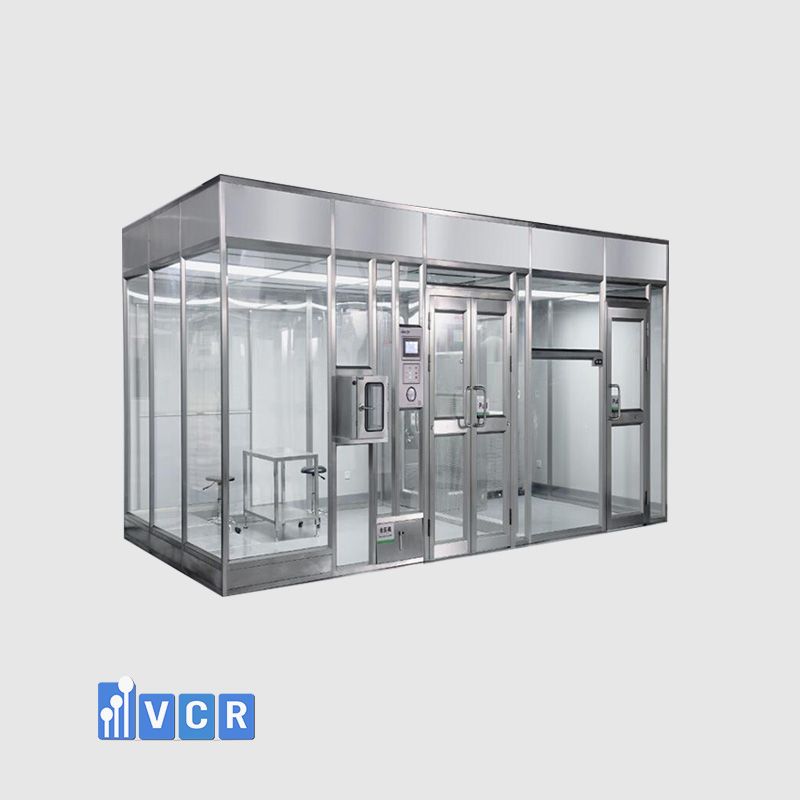
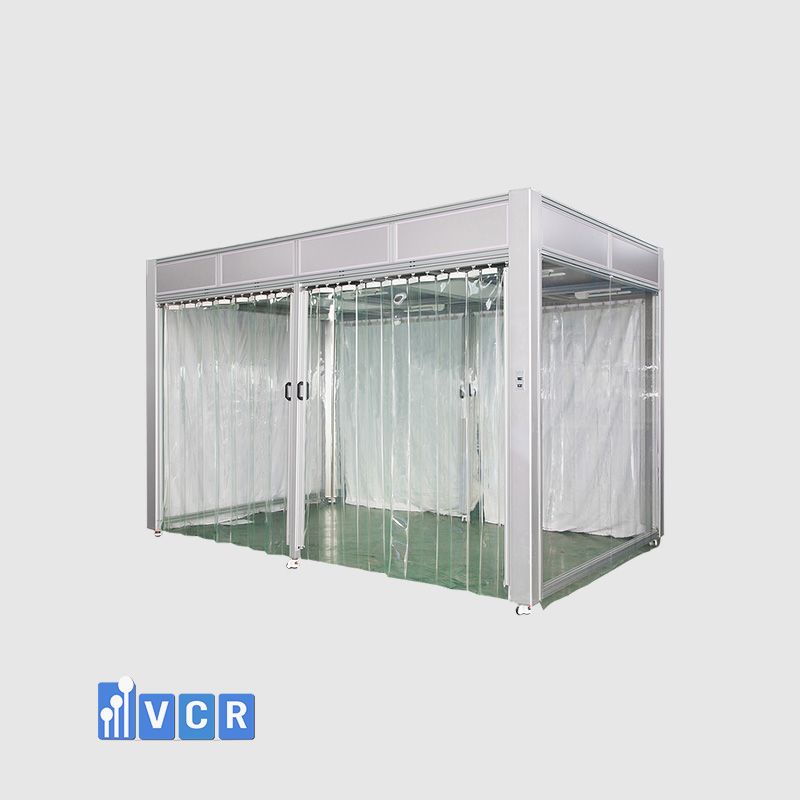
Suggested configuration: Stainless-steel frame with PVC curtain or rigid panel, HEPA H14 filtration, dust-proof LED lighting.
-
Recommended cleanliness class: ISO Class 8 or better.
-
-
Filling area clean booth (Filling Area)
-
Usage location: Where product is dispensed from tanks into bottles/jars — the most hygiene-sensitive step.
-
Requirement: Strict control of microorganisms and dust; avoid direct exposure between ambient air and product.
-
Suggested configuration: Unidirectional (laminar) air flow clean booth, HEPA H14 filter, continuous positive pressure.
-
Recommended cleanliness class: ISO Class 7 — as required by many cosmetics GMP standards.
-
-
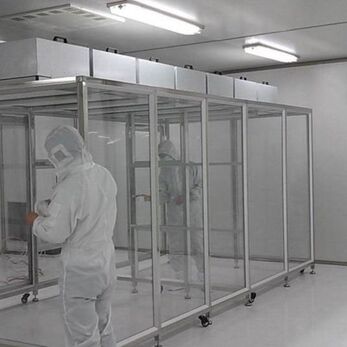
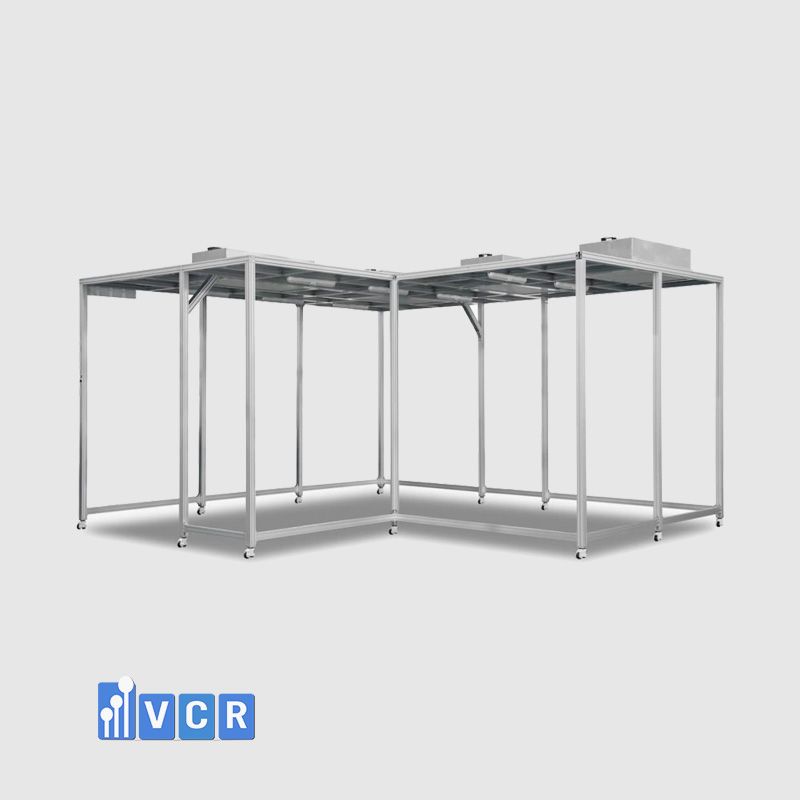
Mobile clean booth (Modular Clean Booth)
-
Characteristics: Modular design, wheels or detachable joints, easy installation-dismantle-movement.
-
Application: Suitable for small cosmetics factories, labs or zones requiring flexible expansion/reduction.
-
Advantage: Lower investment cost compared to fixed cleanroom, saves space/time for installation.
-
Recommended cleanliness class: Customizable from ISO Class 8 to Class 7 depending on specific requirement.
-
Quick reference of typical cleanliness class in cosmetics industry:
-
Filling – final packaging: ISO Class 7
-
Semi-automatic packaging: ISO Class 8
-
Raw-material weighing/mixing: ISO Class 8
-
Sample storage/test: ISO Class 8
Choosing the right clean-booth model not only helps the factory meet ISO 22716 audit, but also optimizes investment and long-term operation cost.
Read more: Unit Supplying ISO-Standard Clean Booths for Electronics Factories
5. Why choose brand VCR as provider of clean booths meeting ISO 22716?
VCR – Strategic partner for cosmetics factories to meet ISO 22716.
More than just an equipment provider, VCR has accompanied hundreds of cosmetics enterprises through design – installation – verification of clean booths according to ISO 22716. VCR’s difference lies in 3 core factors:
-
Over 10 years of specialized experience in the cleanroom industry. VCR is one of the few companies in Vietnam focusing comprehensively on clean-room solutions, with a decade of project execution for factories in cosmetics, pharmaceuticals and functional foods. We don’t just sell equipment — we deeply understand your industry.
-
Engineering team versed in cosmetics GMP. VCR holds a technical team trained in cosmetic GMP, capable of consulting on floor layout, movement flows, clean-controlled zones tailored to each product line. Thus the enterprise can more easily pass ISO 22716 assessment on the first try.
-
Integrated clean-room solution ecosystem. Not only providing clean booths, VCR also offers a product ecosystem covering full-suite for cosmetics factories:
-
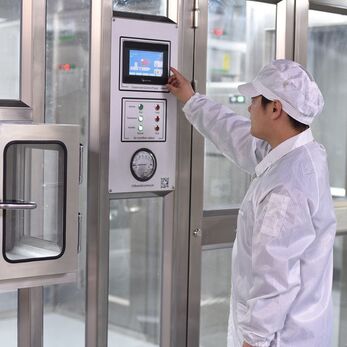
Pass-box – transferring clean items between zones
-
Air shower – personnel dust-removal room
-
Clean-room panels, air-filters, dust-proof LED lighting…
All designed synchronously, optimized for operation and easy future expansion. We provide full technical documentation, real-site photos and hand-over letters, giving you confidence during assessment, verification or bidding.
When working with VCR, you receive not just a technical solution — you receive a clear roadmap to achieve ISO 22716: from survey, design to hand-over and maintenance.
-
Read more: Mini Clean Booth: Economical solution for laboratories
6. Frequently asked questions about clean booths for cosmetics factories
Q: Does the clean booth need verification?
A: Yes. After installation, the clean booth must be tested for cleanliness class (according to ISO Class 7 or 8), airflow rate/velocity, differential pressure and HEPA filter efficiency. This is a key part of ISO 22716 or cosmetics GMP assessment.
Q: Is a permit required to install a clean booth?
A: Typically no special permit is needed, as the clean booth is considered internal improvement and doesn’t affect factory structure. However, if you combine electrical works, HVAC and control systems, a capable contractor is required.
Q: How long does it take to install a clean booth?
A: On average 7-15 days, depending on scale, materials used and factory floor conditions. For urgent projects, VCR can shorten installation to as low as 5 days.
Q: Is the clean booth durable? Does it need frequent maintenance?
A: A clean booth has an average lifespan of 5-10 years if properly maintained. Periodic maintenance items include:
-
HEPA filter replacement: every 6-12 months depending on usage.
-
Check differential pressure – airflow velocity.
-
Surface cleaning – pre-filter cleaning.
VCR provides a full maintenance package to help maintain stable performance and cleanliness class over time.
If you are building a new cosmetics factory, renovating a production line or need to meet ISO 22716 certification, VCR is ready to accompany you from design to verification.
Contact now for:
-
Consultation on suitable clean-booth model for your factory layout.
-
On-site survey and detailed quotation within 24 hours.
-
Full technical documentation – certification – drawings to support assessment.
Contact:
Hotline: 090.123.9008
Email: [email protected]
Website: https://cleanbooth.vn/
Dat VCR